An ISBN (International Standard Book Number) is a unique numeric identifier assigned to each edition and format of a book so that retailers, libraries, and distributors can track, order, and manage inventory accurately. Without a valid ISBN, most brick‑and‑mortar and online stores will not list a title in their systems.
According to ISBN services, The phrase “isbn 10 vs 13” refers to two versions of the same global identification system for books: the older 10‑digit format (ISBN‑10) and the newer 13‑digit format (ISBN‑13). Both point to the same core data (language group, publisher, specific title, and check digit), but they differ in total length, prefix, and the way the final check digit is calculated.
ISBN‑10 consists of 10 digits broken into four parts: group identifier, publisher code, title identifier, and a single check digit at the end. ISBN‑13 consists of 13 digits and five parts, adding a three‑digit prefix (usually 978 or 979) in front of the same core blocks, plus its own check digit at the end.
By the mid‑2000s, the original 10‑digit space was running out of available numbers as global publishing volume grew rapidly. ISBN‑13 expanded the available number range and aligned book identifiers with the standard EAN‑13 product barcodes used across retail, making book data easier to integrate with wider supply‑chain systems.
Both ISBN‑10 and ISBN‑13 use a check digit to help detect common data entry mistakes, but the math behind each version is different. ISBN‑10 uses a modulus‑11 calculation (which can produce “X” as the check digit), while ISBN‑13 uses a modulus‑10 calculation that multiplies alternating digits by 1 and 3.
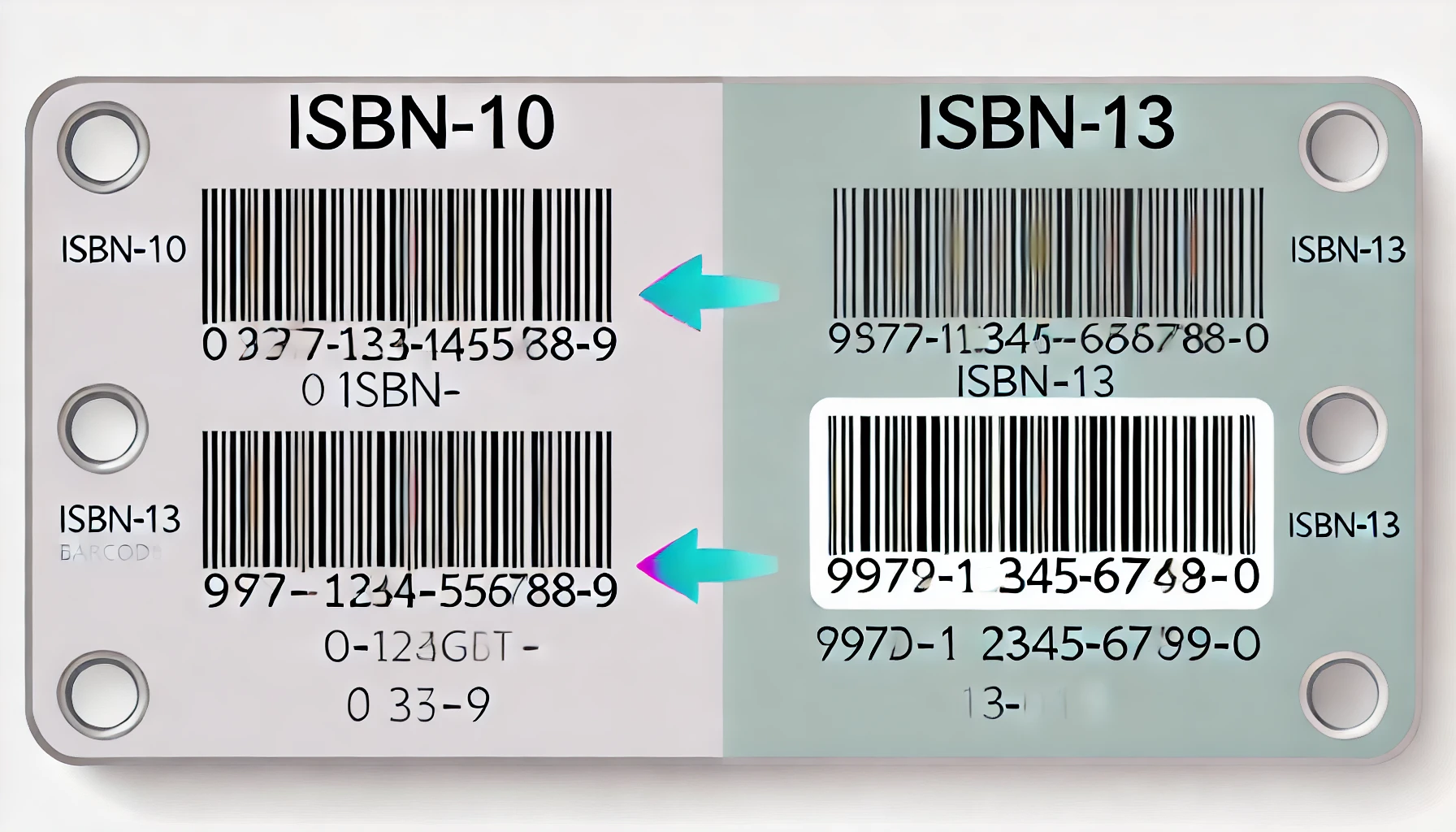
In most cases, an ISBN‑10 can be converted to an ISBN‑13 that refers to the same book. The usual process is to add the 978 prefix in front of the first nine digits of the ISBN‑10, remove the original check digit, and then recalculate a new ISBN‑13 check digit using the modulus‑10 method.
For new books, ISBN‑13 is now the default and required standard for assignment, distribution, and barcoding. ISBN‑10 still appears in older records and on pre‑2007 printings, but most modern platforms, distributors, and ISBN agencies work primarily with 13‑digit identifiers.
1. Do I need ISBN‑10 or ISBN‑13 for a new book?
New titles should use ISBN‑13, as this is the current global standard and is what ISBN agencies and major retailers expect for cataloging and barcoding. ISBN‑10 is mainly relevant only when dealing with older printings or legacy databases.
2. Can every ISBN‑10 be converted to an ISBN‑13?
Most ISBN‑10 numbers convert cleanly to an ISBN‑13 by adding the 978 prefix and recalculating the check digit, so both numbers then refer to the same edition of the book. However, ISBN‑13s that begin with 979 do not have an ISBN‑10 equivalent, so conversion does not work in the opposite direction for that range.
3. Why do some books show both ISBN‑10 and ISBN‑13?
Many books published around the transition period (before and just after 2007) display both formats so older systems can still search by ISBN‑10 while newer systems rely on ISBN‑13. In these cases the middle digits usually match, but the total length and final check digit differ between the two versions.
4. Do ebooks also use ISBN‑13?
Ebooks can have their own ISBN if the publisher chooses, and when an ISBN is assigned, it follows the same 13‑digit format as print editions. Each format that is treated as a separate product in the market (paperback, hardcover, EPUB, PDF, audiobook) typically receives its own distinct ISBN‑13.