If you’re new to publishing, chances are you’ve already experimented with AI tools and thought, “Wait… can I actually publish a book using this?” You’re not alone. With AI writing tools becoming more powerful and accessible, thousands of beginners are asking the same question: can I publish a book written by AI, and is it safe?
The honest answer is yes, you can publish a book with the help of AI. But how you use AI makes all the difference. There’s a big gap between using AI as a helpful assistant and publishing a book that’s entirely generated without human involvement. This guide will walk you through everything in simple terms, so you know what’s allowed, what’s risky, and what actually works for first-time authors.
When most beginners say they want to publish an AI-written book, they usually don’t mean letting AI do everything while they disappear. In reality, AI is best used as a support tool. It can help you brainstorm ideas, organize your thoughts, write rough drafts, and clean up your language. You’re still the one making decisions, shaping the message, and approving the final version.
That’s exactly how professional publishing companies like us approach AI. It’s treated as a tool, not the author. You stay in control, and your book stays yours.
Yes, publishing a book written with AI assistance is legal. There’s no law in the U.S. that says you can’t use AI to help you write. Where things get tricky is copyright ownership.
The U.S. Copyright Office has made it clear that content created entirely by machines, without meaningful human involvement, is not eligible for copyright protection. You can read this directly from their official guidance here:
👉 https://www.copyright.gov/ai/
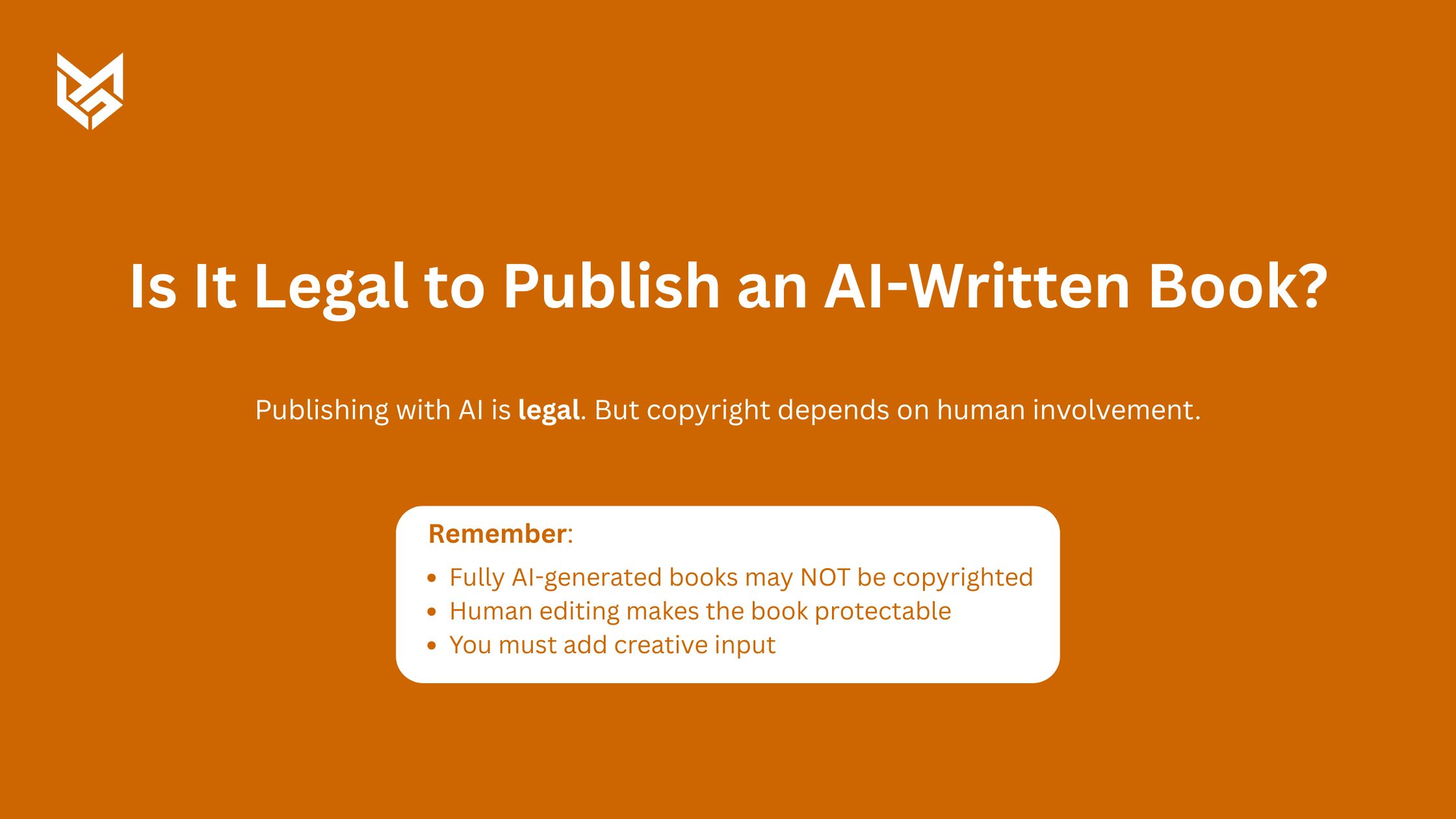
In simple words, if AI writes the entire book and you don’t really add or change anything, you may not fully own the rights to it. That’s why human input, editing, and creative decisions are so important.
You can copyright a book if you play an active role in creating it. Using AI to help draft content does not automatically disqualify your book from copyright protection. What matters is whether a human author shaped the final work.
If you revise the text, restructure chapters, add your own insights, and make creative choices, your book can still qualify for copyright. This is why many authors choose professional editing and publishing services to ensure their work is both legally safe and high quality.
Amazon allows AI-assisted content, but transparency is required. When publishing through Kindle Direct Publishing, authors must disclose whether their content was created using AI tools. Amazon explains this clearly in its official guidelines:
👉 https://kdp.amazon.com/en_US/help/topic/G200672390
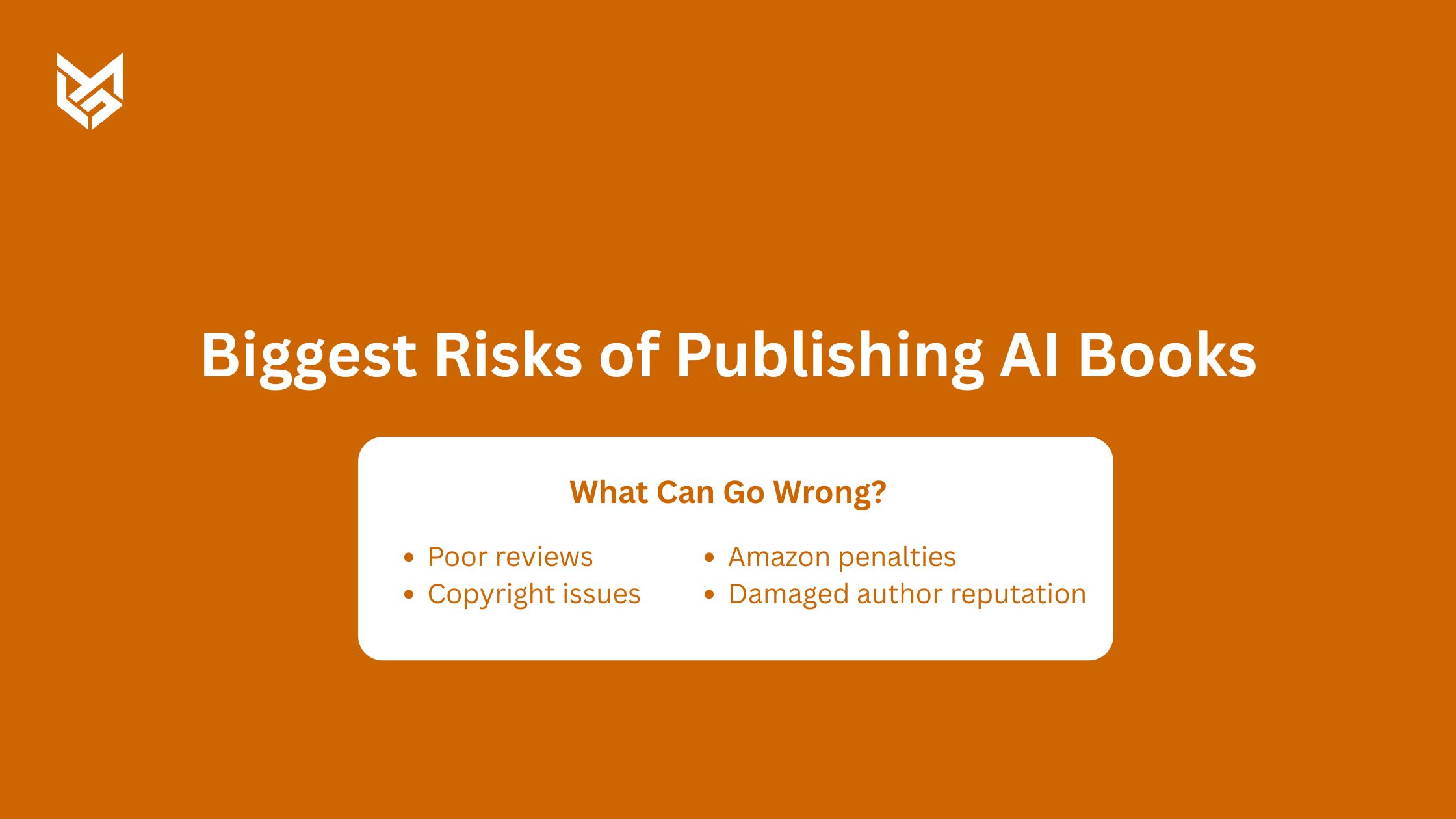
The bigger issue isn’t AI itself, but quality. Amazon actively removes low-quality, spammy, or misleading books. Uploading raw AI text without editing often leads to bad reviews, poor rankings, or even account issues.
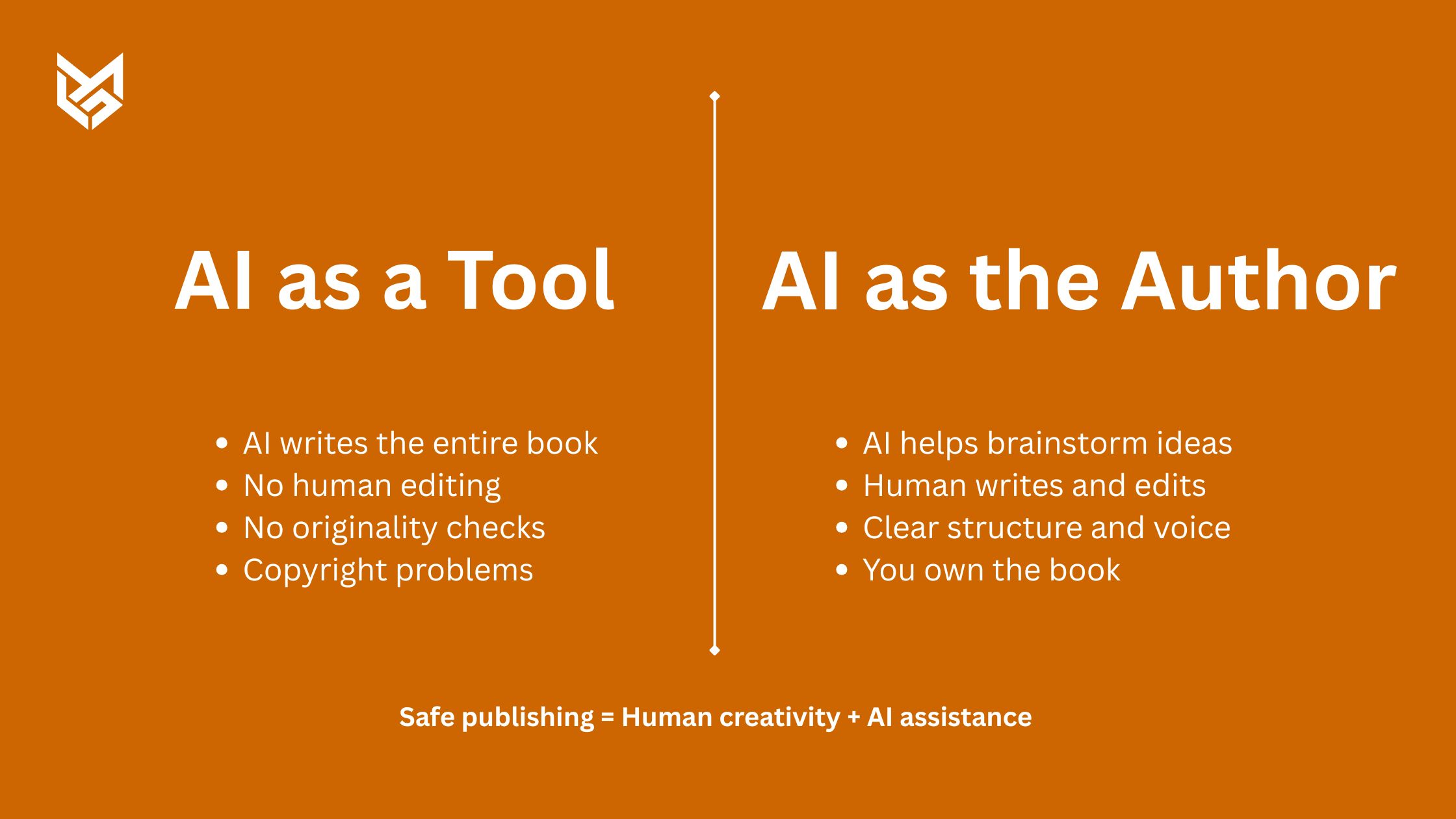
For beginners, the safest move is using AI to speed things up, then polishing the book so it meets reader expectations.
If you’re just starting out, AI is incredibly helpful at the idea stage. You can use it to brainstorm book topics, clarify your niche, and even decide whether your idea is worth pursuing. This is especially useful if you feel stuck or overwhelmed at the beginning.
AI also helps with market research. You can ask it to identify common problems readers have in your niche or suggest topics people are actively searching for. To double-check demand, tools like Google Trends let you see whether interest in a topic is rising or falling over time.
This combination of AI insights and real-world data helps you avoid writing a book nobody is searching for.
Many beginners struggle with structure more than writing itself. AI can help by creating outlines and chapter ideas so you’re not staring at a blank page. This makes the writing process feel much less intimidating.
That said, AI-generated outlines are just starting points. You should always review them and adjust the flow so it feels natural. Writing in small sections, instead of asking AI to write the entire book at once, helps keep the tone human and consistent.
One of the biggest beginner mistakes is skipping proper editing. Even if AI grammar looks good, the content can still feel robotic, repetitive, or shallow. Readers notice this immediately.
You can use AI tools to clean up grammar, but human editors improve flow, clarity, and emotional connection. This is why professionally edited books consistently outperform AI-only books in reviews and reader satisfaction.
Formatting is about how your book looks on the inside. This includes spacing, margins, headings, and how chapters appear on Kindle or in print. AI tools can help create basic formatting, but they often miss platform-specific rules.
Amazon has strict formatting requirements, which you can see here:
👉 https://kdp.amazon.com/en_US/help/topic/G200645680
Improper formatting can lead to rejected uploads or a poor reading experience. Many first-time authors choose professional formatting to avoid technical issues and make their book look polished.
AI image tools are great for generating cover ideas and visual concepts. They can help you explore styles quickly and affordably. However, a book cover is more than just an image. It’s a sales tool.
Professional designers understand genre expectations, typography, and layout. AI-generated covers often look “almost right,” but readers can usually tell something feels off. That split-second judgment affects clicks and sales.
This is why authors serious about success often invest in professional book cover design instead of relying entirely on AI.
Interior design affects readability. Exterior design affects first impressions. Both matter more than most beginners realize. AI can help with drafts and mockups, but professional designers ensure consistency, balance, and credibility.
A well-designed book builds trust instantly.
AI is great for drafting book descriptions, subtitles, and keyword ideas. However, AI-written descriptions often sound generic or overhyped. A human touch makes them sound authentic and persuasive.
Metadata errors can hurt discoverability, so having experienced eyes review this part is especially valuable.
Yes, you can publish a book with AI assistance, and many beginners already are. The key is understanding that AI works best as a helper, not a shortcut. When you combine AI with human editing, professional design, and ethical publishing practices, you get the best of both worlds.
If you’re new and want to do things the right way from the start, working with experienced publishers like Lynx Publishers can save you time, protect your rights, and help you publish a book you’re actually proud of.